Don't Miss Out On Great Gains! - Best Investment Newsletter


Click for FREE sample of Kirk Lindstrom's Investment Letter

Don't miss out! Subscribe Now

google.com, pub-7001134751860982, DIRECT, f08c47fec0942fa0

Search For More

Showing posts with label China. Show all posts

Monday, March 06, 2017

China Lowers 2017 GDP Growth Target

According to the Financial Times article, "China targets economic growth of around 6.5 per cent," China lowered its annual economic growth target to "around” 6.5%, compared to last year's target range of 6.5% to 7%.

Do you believe these numbers?

This lower target was announced "on Sunday morning by Premier Li Keqiang in his annual “work report” to China’s parliament, the National People’s Congress. "

Other comments in the article of note:
  • "Reflecting Beijing’s caution, Mr Li said the government’s fiscal deficit target would remain unchanged at three per cent of GDP; last year it came in at 3.8%."
  • "Retails sales growth is also expected to moderate slightly to ten per cent this year."
  • "In his work report, Mr Li also predicted that fixed asset investment, a key driver for the world’s second-largest economy, would increase nine per cent. Fixed-asset investment grew only 8.1 per cent last year, below the government’s initial target of 10.5 per cent."
Note: You may have to enter "China targets economic growth of around 6.5 per cent" into a Google search window to get a direct link to the article.  

Wednesday, July 08, 2015

Chinese Shanghai Stock Market Sell-off Perspective

From my July 8, 2015 (today) article "Chinese Stocks Down Over 30%. Is It Time To Buy?"
  • The Shanghai Stock Exchange Composite (SSEC) Index is down 32% from its 2015 peak.
  • Past Sell-offs of the SSEC Index were as high as 80%.
  • Mike Holland thinks many of the stocks in the index are still at bubble valuations.
  • The Chinese stock market is down over 30% from its very recent peak. I like to buy things when they are on sale, especially stocks. Following 18th century British nobleman Baron Rothschild, I try to "Buy when there's blood in the streets, even if the blood is your own." Is blood running in the streets of China or is this just a flesh wound?


Long Term Results that Speak for Themselves
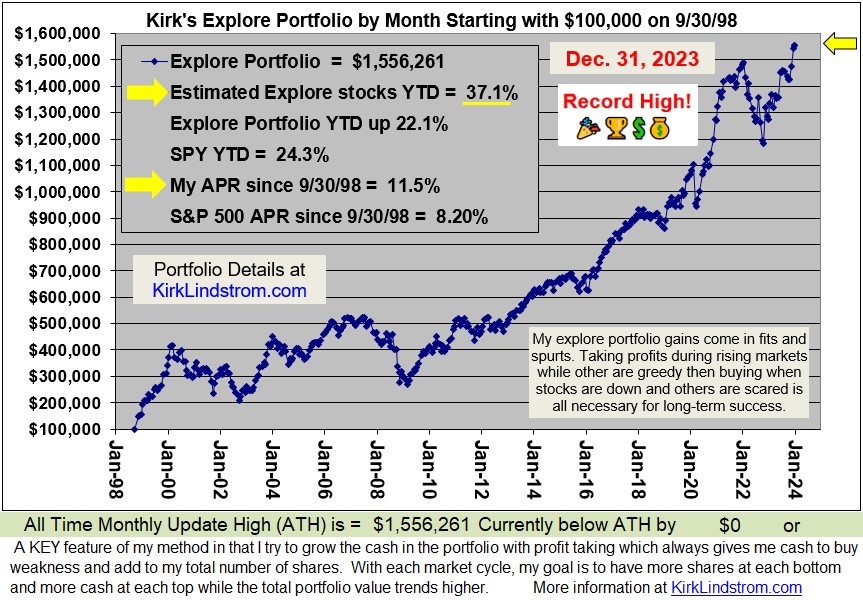
Since 9/30/98 inception, "Kirk's Newsletter Explore Portfolio" is UP 571%
vs. the DJIA UP only 119%, S&P500 UP only 169% and NASDAQ UP only 194% 
Since 12/31/98: 9.2% Compound Annual Return vs. 5.1% for the S&P500 with dividends reinvested (All through 6/30/15)
(More Info, Testimonials & Portfolio Returns)
Subscribe NOW and get the July 2015 Issue for FREE!!!


Tuesday, March 09, 2010

China Will Not be Adding to Gold Reserves but Says Gold Not a Bad Asset

Yi Gang, China's head of the State Administration of Foreign Exchange also know as "SAFE" told reporters US Treasuries remain important to China but they would not be adding to their gold reserves. Yi Gang said:
"The U.S. Treasury market is the world's largest government bond market. Our foreign exchange reserves are huge, so you can imagine that the U.S. Treasury market is an important one to us."
Gold quote and charts
Gold currently $1,117 per oz.

Reuters reported:
Speaking during the annual session of parliament, Yi expressed the hope that China's presence in the U.S. Treasury market would not become a political football. China, he stressed, was not in the game of short-term currency speculation.

"It is market investment behavior, and I don't want it to be politicised," he said. "We are a responsible investor, and we can surely achieve a win-win result in the process of investing."
The Wall Street Journal said China's gold reserves were 1,054 tonnes at the end of 2009. A metric tonne is a unit of mass equal to 1,000 kg (2,204.6 US poundslb) or approximately the mass of one cubic metre of water at four degrees Celsius.

Yi Gang disapointed gold investors by saying he didn't think gold was a great investment for those with a 30-year time horizon.
"Gold is not a bad asset, but currently a few factors limit our ability to increase foreign-exchange investment in gold."
and
"It is, in fact, impossible for gold to become a major investment channel for China's foreign exchange reserves. I have 1,000 tonnes now, and even if I doubled that holding, according to current prices, that would be about $30 billion."
The Wall Street Journal article continues:

Currently, China is the world's sixth largest official holder of the metal at 1,054 metric tons, data from the World Gold Council from the end of 2009 shows.

That accounts for 1.5% of the country's total reserve holdings, a small amount compared with the largest gold holder, the U.S., where gold holdings account for 68.7% of total reserves.

There is no way gold could be a meaningful percentage enough to count.
China doesn't disclose the exact composition of its reserves but the consensus is about two-thirds are invested in dollar backed assets. Yi Gang said SAFE has diversified its holdings beyond the dollar with investments in the euro, yen and some emerging market currencies.
"The foreign exchange reserves are mainly invested in bonds issued by governments and government agencies of the developed and developing countries with high credit ratings, assets issued by companies and international organisations, funds and so on."
More information:


Friday, June 20, 2008

Inflation Adjusted Gasoline Prices at Record Levels; China Raises Energy Prices

Gasoline prices have nearly doubled in less than a year. That is only half the story. This chart, courtesy of StockCharts.com, shows oil and gasoline prices have more than tripled since January 2005!
This chart shows that the share prices for the major oil companies have risen right along with the price of energy.

Our pain at the pump has been their gain, which may explain the bad feelings towards the oil industry.

One reason oil prices have continued to go up despite higher prices that are supposed to lower demand is some countries like China set prices that force their refiners to sell gasoline at a loss. It works out as a government mandated subsidy for consumers and industry. Yesterday China raised fuel prices to curb demand.
  • June 20 (Bloomberg) -- China, the world's second-biggest oil-consuming nation, unexpectedly raised gasoline and diesel prices by at least 17 percent and increased power tariffs to rein in energy use, potentially driving up inflation.

    The record price increase, the first since November, may ease refining losses at China Petroleum & Chemical Corp. and PetroChina Co., who have been forced to sell fuels below cost. The companies' shares rose in Hong Kong trading.

This chart, courtesy of StockCharts.com, shows oil and S&P500 prices.
This chart, courtesy of Chart of the Day, shows gasoline prices adjusted for inflation.

Of Note on the chart:
  1. After adjusting for inflation, gasoline prices are at record highs that are 18% above the old inflation-adjusted peak of 1981!
  2. Gasoline prices are above a trend channel (see red line) that has been in existence since early 2000.
  3. Large spikes in oil prices are often followed by recessions.
The days of cheap energy are probably gone but as major users of gasoline, such as China, allow prices consumers pay to go up, we should get some relief from the relentless price hikes for energy.

Followers - Click "follow" to get an email alert for new articles

Kirk Lindstrom's Investment Letter Performance