Don't Miss Out On Great Gains! - Best Investment Newsletter


Click for FREE sample of Kirk Lindstrom's Investment Letter

Don't miss out! Subscribe Now

google.com, pub-7001134751860982, DIRECT, f08c47fec0942fa0

Search For More

Showing posts with label NNVC. Show all posts

Tuesday, March 15, 2016

NanoViricides Inc up 145% YTD at $2.89 with Much Higher Target

NanoViricides Inc (NYSE: NNVC) is up 186% since I added at $1.01 during market weakness last year!  My new subscribers got a second chance early this year.

Obviously, I love it when a newsletter stock I added to less than a year ago at $1.01 jumps over 100% and analysts before analysts jump on the bandwagon and raise the target price. At $2.89, 

I could easily sell enough shares to be on house money today and still have more than I started the year with, but it hasn't hit my "take profits" level yet...

Yesterday in an article called "NanoViricides Inc Stock Is An 52-Week High Flier" David Hannula wrote
The stock of NanoViricides Inc  hit a new 52-week high and has $7.83 target or 171.00% above today’s $2.89 share price. The 7 months bullish chart indicates low risk for the $168.37 million company. The 1-year high was reported on Mar, 15 by Barchart.com. If the $7.83 price target is reached, the company will be worth $287.91M more. The 52-week high event is an important milestone for every stock because it shows very positive momentum and is time when buyers come in. During such notable technical setup, fundamental investors usually stay away and are careful shorting or selling the stock. The stock increased 8.65% or $0.23 during the last trading session, hitting $2.89. About 567,377 shares traded hands or 101.53% up from the average. NanoViricides Inc (NYSEMKT:NNVC) has risen 136.89% since August 7, 2015 and is uptrending. It has outperformed by 139.83% the S&P500.

Analysts await NanoViricides Inc (NYSEMKT:NNVC) to reports earnings on May, 16.

According to Zacks Investment Research, “NanoViricides, Inc. is a development stage company focused on creating special purpose nanomaterials for antiviral therapy. The Company’s novel nanoviricide class of drug candidates are designed to specifically attack enveloped virus particles and to dismantle them. It also focuses on the development of drugs against a number of viral diseases including H1N1 swine flu, H5N1 bird flu, seasonal Influenza, HIV, oral and genital Herpes, viral diseases of the eye including EKC and herpes keratitis, Hepatitis C, Rabies, Dengue fever, and Ebola virus, among others. NanoViricides, Inc. is headquartered in West Haven, Connecticut.”
I like insider buying. Hannula wrote:
Since September 15, 2015, the stock had 1 buying transaction, and 0 insider sales for $32,500 net activity. Boniuk Milton bought 25,000 shares worth $32,500.
Hannula is way behind the times. Boniuk Milton has bought many more shares than that. From http://www.nasdaq.com/symbol/nnvc/insider-trades


Warning! The potential revenue from any of its drugs is huge. NNVC is very risky like a stock option that does not expire unless it goes under so I keep my cost basis a small percentage of my explore portfolio as I work to get on “house money.”


Kirk Lindstrom's Investment Letter 
 Subscribe NOW and get the March 2016 Issue for FREE!!!


Monday, April 06, 2015

NanoViricides Progress Report NNVC

NanoViricides Provides an Update on Its Progress over the Last Quarter


Kirk's Disclosure:  I cover NNVC in my newsletter with a list of prices to buy and sell in the current (April 2015) issue.   I also own the stock but I buy and sell with the goal to work my position to "house money" where I get my original investment out and all shares are profit.  Unlike many of the stocks in my newsletter, I am not there yet with NNVC. 
WEST HAVEN, CONNECTICUT -- Monday, April 6, 2015 -- NanoViricides, Inc. (NYSE MKT: NNVC) (the "Company") a nanomedicine company developing anti-viral drugs, reports on the Company's progress in the recent quarter.
Ebola
Using NanoViricides's rapid design platform, it took only 4 months from design to synthesis of the multiple EbolaCide drug candidates needed for study. In late January, these novel anti-Ebola drug candidates were sent to our collaborating BSL-4 facility for initial testing. Our drug candidates were found to be broad-spectrum, in that they were equally effective against Ebola virus as well as Marburg viruses. This is unlike the antibody-based, siRNA-based and antisense-based anti-Ebola therapeutics currently being advanced, which only work against specific strains with a very narrow and selective spectrum of activity. Broad-spectrum activity of our drug candidates is a very important and valuable characteristic, as it indicates that mutations of the virus in the field are unlikely to cause escape of the virus from our final EbolaCide™ drug. We believe that with the new insight we have gained, and with our experience from earlier studies, we can continue to optimize our multiple drug candidates before another Ebola epidemic strikes. The recent outbreak in Africa, though now waning, has unequivocally demonstrated the need for an effective, broad-spectrum, anti-Ebola therapeutic in order to control any further outbreaks.
Herpes
The Company has also been working on its anti-herpes drug candidates. Our anti-HSV (herpes simplex virus) drug candidates have previously shown strong activity with >99.9% inhibition when tested against two significantly different strains of HSV-1 in cell culture studies. The anti-HSV drug candidates have since been further modified to improve effectiveness in dermal application in a small animal dermal HSV-1 infection model. The cell culture and animal studies have been completed as of today and we are now awaiting the reports. These studies were performed in Professor Ken Rosenthal's laboratory at the Northeast Ohio Medical University.
We anticipate that these broad-spectrum anti-HSV drug candidates would be effective against oral and skin lesions caused by HSV-1 strains, genital lesions caused by HSV-2 strains, herpes keratitis (a potentially blinding eye disease caused by HSV-1), and most probably against shingles as well. Shingles or zoster is a wide-spread skin disease that occurs from re-awakening of the chickenpox virus (namely, human herpesvirus-3 aka varicella zoster virus). VZV, like HSV-1 and HSV-2 is in the alpha-herpesvirus family. There are one million cases of shingles in the US yearly. There are approximately 25 million cases of genital herpes in the US on an annual basis.
Influenza
We are currently working to increase the production of FluCide™, our anti-influenza drug candidate. FluCide has been designed for use in hospitalized patients with complicated influenza. FluCide was found to be extremely safe in preliminary toxicology studies in mice and rats. As a result of the extreme safety finding, it was estimated that about 2.5kg of drug substance would be needed for the complete large animal toxicology studies. These studies are needed for filing an Investigational New Drug Application (IND). In mice, no adverse events were observed even at doses as high as 480 mg/kg/d repeated on five days (a total of 2,400 mg/kg), when given intraperitoneally. Similar strong safety was also observed in the initial part of the formal toxicology study in rats. In rats, no adverse events were observed with doses as high as 300mg/kg/d given by rapid intravenous infusion, and repeated for 14 days (a total of 4,200 mg/kg). We are in the process of producing a total of 2.5kg of FluCide for the final large animal toxicology studies. Our toxicology studies are being performed by BioAnalytical Systems, Inc. (BASI) of Indiana (BASI).
We are now working to optimize all of the processes involved in the production of FluCide. Equipment needed for this task is being acquired, and is being installed by factory representatives as it arrives. Some items have lead times of 6 to 8 weeks for delivery. We are working as quickly as possible on setting up the production processes at our new state of the art c-GMP-capable manufacturing facility in Shelton, CT.
We are happy to announce that our Biological Characterization Group has now completely moved to our Shelton, CT campus. We are implementing a phased move to Shelton so that there is minimal impact on our continuing operations. We plan on continuing to use our West Haven facility to maximize R&D efforts on our large number of drug development programs.
Drug Pipeline
The Company has six commercially important drug development programs in its rich pipeline. These include (i) Injectable FluCide for hospitalized patients, (ii) Oral FluCide™ for out-patients with Influenza, (iii) broad spectrum HerpeCide™ for various forms of herpes virus infections that cause oral and genital herpes, herpes keratitis (eye disease), and possibly also chickenpox, and shingles, (iv) a broad-spectrum antiviral ophthalmic solution for viral diseases of the eye such as epidemic kerato-conjunctivitis (EKC, caused usually by adenoviruses), and herpes keratitis, (v) DengueCide™, a broad-spectrum drug against all four types of dengue viruses, and (vi) HIVCide™, a broad-spectrum anti-HIV drug candidate that may be a "functional cure" against HIV/AIDS. In addition, we are engaged in research programs for the development of broad-spectrum drug candidates against a number of other viruses. These include filoviruses such as Ebola and Marburg, Rabies, and many others. We continue to advance these programs as opportunities become available. In the past, we have been constrained by the limitation of our small laboratory R&D facility in West Haven, CT. We now have a 18,000 sq. ft. state of the art cGMP-capable manufacturing facility for clinical scale production of any of our nanomedicine dug candidates including injectables, located in Shelton, CT. We are now working to bring the facility into full-scale operation. We anticipate that this facility will dramatically expand our ability to move our drug candidates into a clinical stage pipeline.
The Company has previously announced that it had approximately $36.4 Million (M) of current assets plus restricted cash (cash, cash equivalents, collateral advance, prepaid expenses, and security deposits) as of December 31, 2014. The Company's operating expenditure is approximately $2M per quarter. We believe that we have sufficient funding available to perform initial human clinical studies on at least one of our drug candidates, and possibly to bring at least one other drug candidate into IND stage.

About NanoViricides 
NanoViricides, Inc. (www.nanoviricides.com) is a development stage company that is creating special purpose nanomaterials for antiviral therapy....  Please read the full disclosures for this press release

Tuesday, October 07, 2014

Ebola Drugs: Companies Working on a Cure for Ebola

List of companies working on a cure or other drugs to fight Ebola.

Covered in my newsletter:
  • NanoViricides Inc. NNVC
    NanoViricides "has now developed novel nanoviricide drug candidates against Ebola that it believes could lead to a successful therapeutic. These drug candidates are designed to mimic the host cell receptor onto which the Ebola virus binds to cause an infection. The site at which the virus binds does not change, in spite of all the mutations a virus undergoes. Thus the Company believes that its drug candidates would continue to work in spite of field mutations in the virus. This is unlike vaccines, antibodies, siRNA, antisense, and several other therapeutic modes which a virus can readily overcome due to mutations it acquires in the field."


Others:
  • BioCryst Pharmaceuticals Inc. BCRX
    ==>"BioCryst last month received a $4 million pact to develop its BCX4430, which it hopes can be used for a wide spectrum of viruses like Ebola. The drug proved helpful in tests on yellow fever patients."
  • Chimerix Inc. CMRX
    Thomas Duncan, the man who lied about his exposure to Ebola in Liberia on his return to the US, was treated with a drug developed by Chimerix Inc.
  • Crucell, a subsidiary of Johnson & Johnson. JNJ
    ==>"developing a vaccine that would be injected into healthy individuals to prevent the disease from attacking"
  • Fujifilm Holdings Corp. FUJIF
    ==>"Fujifilm has diversified into chemicals, medical products and pharmaceuticals. Its Toyama Chemical Co. has been contracted out to test an anti-influenza drug on an Ebola patient."
  • Tekmira Pharmaceuticals TKMR
    ==>"Based in Burnaby, British Columbia, Tekmira’s drug has been used on a number of infected patients, including Richard Sacra, the American missionary who contracted the deadly virus in Liberia." 
  • GlaxoSmithKline GSK
  • NewLink Genetics Corp. NLNK
  • Sarepta Therapeutics Inc. SRPT
    ==>"Garabedian says that its Ebola test program, which he said could be resumed quickly, resulted in a 60% to 80% survival rate when used on test monkeys infected with Ebola. Its Marburg drug has proved 80% to 100% effective. Sarepta used a gene-sequencing technique to come up with its treatment, and Garabedian says it can be easily adapted to treat other diseases. A new gene sequencing matrix to treat Dengue fever using the same technique was developed in 11 days, he said."
Sources of Quotes:
Kirk Lindstrom's Investment Letter
==>
   Subscribe Now!   <==

Thursday, January 16, 2014

NNVC NanoViricides Soars After Tax Loss Selling Season Ends

One of my "Explore Portfolio" speculation stocks, NanoViricides (My charts at NNVC), is soaring again shortly after adding shares last year at $4.60 as part of my "year end tax loss selling play" where I try to buy or add to positions in stocks I think are making relative bottoms due to tax loss sellers, even those with short term losses.
NNVC Intraday Chart - Click for Full Size Image
For example, last year NNVC was the biggest gainer in my newsletter "Explore Portfolio" with a total gain for the year of 191.8%.  You might ask "why would a stock that nearly tripled have people selling it for a loss?"


The answer is easy.  Some jumped into the stock just after I took profits in my Explore portfolio at $7.25 before it came back to Earth.  At $4.60, the stock was down 37% from where I took profits, a good pullback to add shares and a significant loss for those looking to offset gains in their other stocks.


Recent Newsletter Trades for NNVC
Smart traders with a short term loss who plan ahead were probably going to sell a month or more before the year ended, so I was there on November 21, 2013 to take some of their shares.  They could then buy 31 days later at the end of the year when poor planners with short term losses would sell.
Don't Miss Out!
Subscribe To my newsletter today
and get the January 2014 issue for free
(Start subscription with February issue)

Not-so-smart traders with short term losses who DID NOT plan ahead waited until later in the year to sell the stock and then they will buy back 31 days later to avoid the IRS "wash sale" rules.

You can see on the top chart above that we got a better low for buying in November than in December, probably because the November tax-loss-sellers were buying shares back.  Now we can enjoy the run and hit my next newsletter explore portfolio profit taking level, listed on page 5 of my January 2014 Investment Newsletter.

Don't Miss Out!

Subscribe To my newsletter today
and get the January 2014 issue for free
(Start subscription with February issue)

Monday, September 23, 2013

NanoViricides to List on NYSE with Symbol NNVC

One of my "Explore Portfolio" speculation stocks, NanoViricides (My charts at NNVC), is soaring on a recent batch of great news including today's announcement that its common shares have been approved to list on the the New York Stock Exchange (NYSE) and will begin trading on  on Wednesday, September 25, 2013 with the ticker symbol NNVC.  Press Release
WEST HAVEN, Conn.--(BUSINESS WIRE)-- 
NanoViricides, Inc. (NYSE MKT:NNVC) (the "Company") is pleased to announce that its common shares have been approved to list on the NYSE MKT (the “Exchange”) and will begin trading on the New York Stock Exchange on Wednesday, September 25, 2013. The Company will continue to trade under the symbol "NNVC". In connection with this listing, NanoViricides’ common stock will cease trading on the OTC BB.
“Trading on NYSE-MKT is an important milestone for us,” said Anil R. Diwan, PhD, President of the Company, adding, “In order to deliver maximum benefit for our shareholders, we decided that listing on a National Exchange was very important. We then determined that NYSE MKT provides an ideal combination of Company Requirements and Market Regulatory Policies that would be of great benefit to development stage biopharma companies such as ours. We are happy to be part of the NYSE MKT community. With a rich platform technology that has already yielded six commercially important drug candidates, we are very excited to move towards human clinical trials, and look forward to a great future on the Exchange.”
NYSE MKT is considered a premier US equities market for listing and trading of small growth companies. NYSE MKT is a fully integrated trading venue within the NYSE Euronext community and leverages the NYSE's advanced and innovative market model to offer a premier venue for listing and trading the stocks of small companies. The venue utilizes the trading, connectivity and routing technologies of the NYSE platform and offers superior price discovery, superior liquidity and reduced trading volatility. Listed companies benefit from issuer-selected Designated Market Makers (DMM) that utilize world-class NYSE trading systems to discover and improve prices, dampen volatility, add liquidity and enhance value. In addition, NYSE MKT-listed companies gain access to the brand visibility and are eligible for the issuer services enjoyed by the NYSE Euronext community.
“We congratulate NanoViricides on their listing with NYSE MKT,” said Scott Cutler, Executive Vice President, Head of Global Listings, NYSE Euronext. “Our community ranges across a variety of industries and it is always exciting for a biotech company like NanoViricides to benefit from our platform and further support their research and development.”
“This move to the Exchange comes at a time when the Company is making excellent progress towards its goal of taking FluCide®, its broad-spectrum anti-influenza drug, into human clinical trials as soon as feasible,” said Eugene Seymour, MD, MPH, CEO of the Company, adding, “In addition, construction of the cGMP pilot manufacturing and R&D facility is proceeding on schedule. The Company now has over $22M in cash that is expected to enable us to complete the FluCide Phase I and II clinical trials. The Company plans to move DengueCide®, a drug for dengue/dengue hemorrhagic fever into human clinical trials following injectable FluCide. DengueCide is in advanced pre-clinical development stage and has already received an Orphan Drug designation from the US FDA. Following these, we also have Oral FluCide, HIVCide, HerpeCide, and EKCCide at various stages in preclinical development. We fully expect these drug candidates to enter human clinical trials, based on the strong effectiveness and safety we have seen so far. Together these drug candidates represent a market size of over $40 Billion. In addition, we know that as a good drug becomes available against a disease, the market size for it expands dramatically. We look forward to realizing the great potential of our Company as we list on the New York Stock Exchange MKT.”
The Company also announces that it has selected J. Streicher & Co., LLC as its Designated Market Maker on NYSE-MKT.
NanoViricides Pipeline
NanoViricides is developing broad-spectrum anti-influenza drugs as part of its rich drug pipeline. The Company believes that its FluCide™ drug candidates will be effective against most if not all influenza viruses, including the H7N9 bird flu, H3N2 or H1N1 epidemic viruses, H5N1 bird flu, seasonal influenzas, as well as novel influenza viruses. This is because FluCide is based on the Company’s biomimetic technology, mimicking the natural sialic acid receptors for the influenza virus on the surface of a nanoviricide® polymeric micelle. It is important to note that all influenza viruses bind to the sialic acid receptors, even if they rapidly mutate. The FluCide drug candidates have already shown strong effectiveness against H1N1 and H3N2 influenza viruses in highly lethal animal models. The injectable FluCide drug candidates have shown 1,000X greater viral load reduction as compared to oseltamivir (Tamiflu®), the current standard of care, in a highly lethal influenza infection animal model. The Company believes that these animal model results should translate readily into humans.
NanoViricides has also developed an oral drug candidate against influenza. This oral version is also dramatically more effective than TamiFlu in the animals given a lethal influenza virus infection. This oral FluCide may be the very first nanomedicine that is effective when taken by mouth.
In addition, NanoViricides has developed drug candidates against Dengue, HIV/AIDS, Herpes, and Ocular Viral Diseases that have shown strong effectiveness in relevant animal and/or cell culture models.
About NanoViricides:
NanoViricides, Inc. (www.nanoviricides.com) is a development stage company that is creating special purpose nanomaterials for viral therapy. The Company's novel nanoviricide® class of drug candidates are designed to specifically attack enveloped virus particles and to dismantle them. The Company is developing drugs against a number of viral diseases including H1N1 swine flu, H5N1 bird flu, seasonal Influenza, HIV, oral and genital Herpes, viral diseases of the eye including EKC and herpes keratitis, Hepatitis C, Rabies, Dengue fever, and Ebola virus, among others.
This press release contains forward-looking statements
Note.  Currently, NanoViricides is trading with the temporary ticker NNVCD on the Over the Counter, BB exchange.   

On Sept. 10, NanoViricides announced
then on Sept. 12,  NanoViricides announced:
NNVC BUY ALERT!
Note this buy at $0.55 is $1.92 split adjusted.

and get 
the September 2013 Issue for FREE!!

Wednesday, August 07, 2013

NanoViricides Soaring on Recent News

One of my "Explore Portfolio" speculation stocks, NanoViricides (Ticker and my charts at NNVC), is soaring on a recent batch of great news.
Click for full size images
Below is a summary of the good news:

NanoViricides Signs a Non-Disclosure Agreement with the Lovelace Respiratory Research Institute for IND-enabling Efficacy Studies on FluCide® and for Testing its Novel Drug Candidates against the Highly Lethal MERS Human Coronavirus  - Excerpts:
Mon, Aug 5, 2013 7:00 AM EDT
WEST HAVEN, Conn.--(BUSINESS WIRE)--
NanoViricides, Inc. (OTC BB: NNVC) (the "Company") said it has signed a non-disclosure agreement (NDA) with the Lovelace Respiratory Research Institute (“LRRI”). The Company intends to enter into a Master Services Agreement with LRRI for the IND-enabling efficacy studies of both its broad-spectrum injectable and oral FluCide® drug candidates. These studies will employ multiple unrelated subtypes and strains of Influenza A, including the novel H7N9 strain, the subtype which is currently circulating in China. The Company has already shown that the injectable and oral FluCide drug candidates are substantially more effective than oseltamivir (Tamiflu®) in controlling influenza A virus infections in a highly lethal animal model using two unrelated subtypes of influenza A, namely H1N1 and H3N2. In addition to FluCide, LRRI will also be able to evaluate the Company’s anti-MERS drug candidates in cell culture and animal models when available. The NDA enables the scientists at the Company and LRRI to exchange confidential and proprietary information in preparation for the intended studies. 
The injectable FluCide drug is intended for severely ill hospitalized patients while the follow-on oral drug is intended for use in out-patients. Following advice from the Company’s pre-IND meeting with the FDA, the Company intends to evaluate both drugs against multiple unrelated subtypes of influenza A in animal models and in cell culture studies. 
H7N9 is a novel subtype currently circulating in China. Recent studies have indicated that it is a potential pandemic threat. H7N9 was found to be less sensitive to approved drugs than the H1N1/2009 pandemic strain. See New studies on H7N9 raise pandemic concerns | CIDRAP (http://www.cidrap.umn.edu/news-perspective/2013/07/new-studies-h7n9-raise-pandemic-concerns). 
The Company has recently developed drug candidates for evaluation against the novel MERS h-CoV (“Middle East Respiratory Syndrome human Coronavirus”). The Obama administration has designated MERS as a potential threat to public health and national security, on June 4, 2013. Administration declares Mideast flu a potential public health emergency - The Hill's Healthwatch (http://thehill.com/blogs/healthwatch/public-global-health/303441-administration-declares-mideast-flu-a-potential-public-health-emergency). No drugs or vaccines are available against MERS h-CoV. 
The Company has recently executed a NDA with the UK Public Health Agency that is intended to lead to a Master Service Agreement for the evaluation of FluCide against the novel A/H7N9 influenza strain as well as evaluation of the Company’s novel drug candidates against the newly emerging MERS human Coronavirus. The Company believes that independent testing of our drug candidates at these two sites should result in a dataset providing a high degree of confidence.
and

NanoViricides Receives Notification that Clinical Coordinators Have Been Appointed by The European Medicine Agency to Review the Company’s Upcoming DengueCide Orphan Drug Designation Application
Mon, Jul 22, 2013 7:00 AM EDT - Excerpts:
WEST HAVEN, Conn.--(BUSINESS WIRE)-- NanoViricides, Inc. (OTC BB: NNVC) (the "Company") announced today that it has been notified that the Committee on Orphan Medicinal Products (COMP) of the European Medicine Agency (EMA) has appointed a team of clinical coordinators for the purpose of reviewing the Company’s upcoming orphan drug designation application for DengueCide™, its drug candidate for the treatment of dengue and dengue hemorrhagic fever. 
COMP has appointed this team in response to the Company’s submission of a letter of intent to file an Orphan Drug Application with the European Medicines Agency (EMA) for DengueCide™. NanoViricides intends to file this application after the appropriate notice period (usually 60 days) has expired. The actual application will need to be translated into 27 different languages prior to submission.
The Company previously engaged the consulting firm Cote´ Orphan Consulting (COC), headed by Dr. Tim Cote´, to assist with the orphan drug application. The Company, in consultation with COC, has determined that its current lead DengueCide drug candidate is eligible for orphan drug status application in the European Union. The Company has recently filed an Orphan Drug Designation application for DengueCide to the US FDA.
DengueCide is a nanoviricide® that has shown very high effectiveness in an animal model of dengue virus infection. These animal studies were conducted in the laboratory of Dr. Eva Harris, Professor of Public Health and Infectious Diseases at the University of California, Berkeley. Professor Harris has developed a mouse model simulating antibody-dependent-enhancement (ADE) of dengue infection using a special laboratory mouse strain called AG129. ADE in humans is thought to lead to dengue hemorrhagic fever, and is associated with a high fatality rate. In this model, infection with a dengue virus, when the mice are left untreated, is 100% fatal. In contrast, in the same study, animals treated with NanoViricides' DengueCide achieved an unprecedented 50% survival rate. 
There is currently neither an effective drug treatment nor a vaccine for dengue virus infection. Tremendous efforts have been made for dengue vaccine development but, to date, no vaccine candidate has succeeded in clinical trials towards approval.
An orphan designation for our dengue drug candidate, if granted, is expected to help the Company assign a higher priority to its dengue drug program, and undertake rapid development following the influenza drug candidates. 
About Dengue and Dengue Hemorrhagic Fever 
Dengue fever, a very old disease, is caused by dengue viruses. Dengue viruses occur in four different subtypes and infect humans upon being bitten by a mosquito carrying the virus. The disease can result in severe pathology even with a primary infection. However, when a person gets a second infection, with a different subtype of the virus, the disease pathology can be very severe, and can lead to hemorrhagic fever (DHF), with a high case fatality rate. Hyper-endemicity, i.e. the co-circulation of multiple serotypes, has increased the potential for DHF. Increased global temperatures are expected to continue to spread the disease into subtropical areas. In 2013, this mosquito-borne disease is one of the most important tropical infectious diseases globally, with an estimated 400 million cases of dengue fever, over one million cases of dengue hemorrhagic fever, and 50,000-100,000 deaths annually. Although the disease is endemic in many tropical parts of the world, it is considered an orphan disease in the USA and Europe. (From Clinical Microbiology Reviews). 

Click for full size images


More NNVC Charts and Articles

Long Term Results that Speak for Themselves
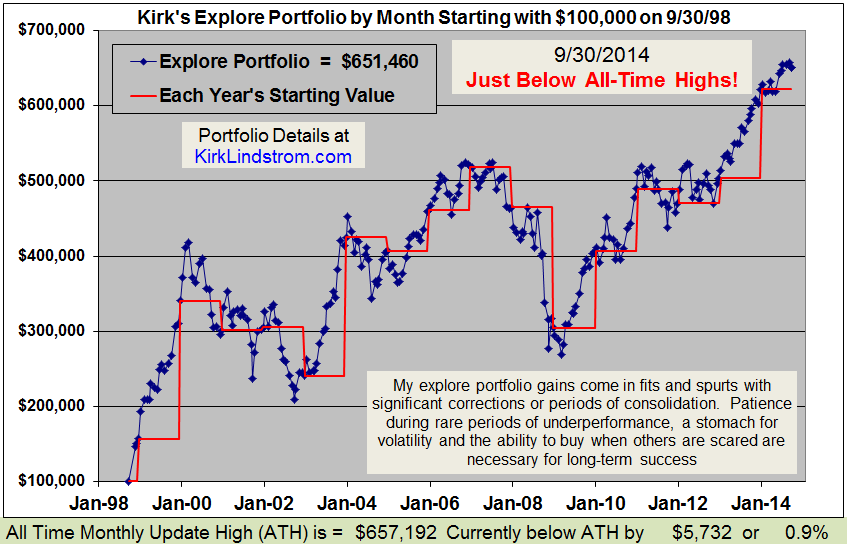
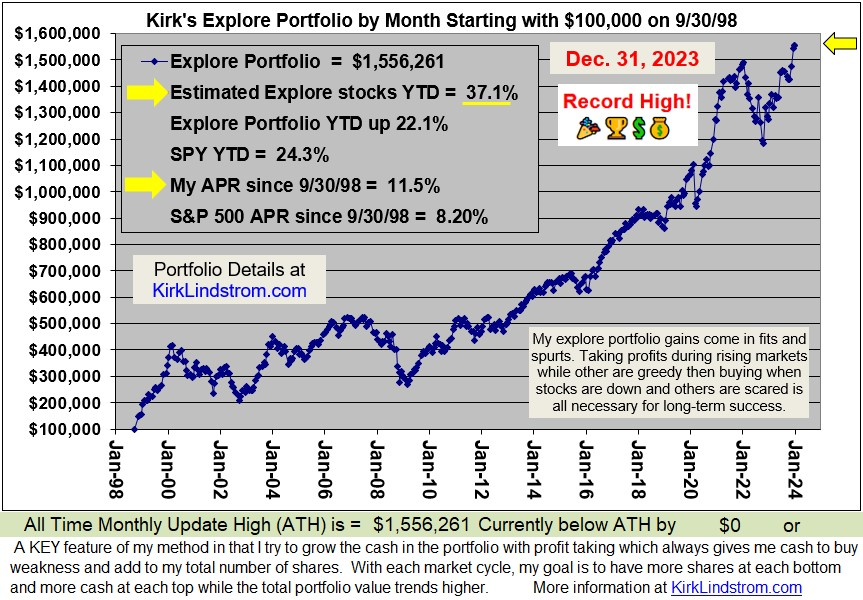
Since 9/30/98 inception, "Kirk's Newsletter Explore Portfolio" is UP 450%
vs. the S&P500 UP only 106% vs. NASDAQUP only 101% (All through 6/30/13)Since 12/31/98: 9.0% Compound Annual Return vs. 3.7% for the S&P500
(More Info, Testimonials & Portfolio Returns)


  • Subscribe to my Newsletter NOW and get the  August 2013 Issue for FREE! !  Your 1 year, 12 issue subscription will start with next month's issue.

  • NNVC BUY ALERT!


    Thursday, April 29, 2010

    NNVC NanoViricides: Is The Correction Over?

    Highly volatile stocks like NanoViricides Inc. (NNVC Charts) often retrace 50% of their moves after a large gain. Savvy traders who missed getting shares near the bottom will look for these periods of consolidation to buy shares.   

    You can see from the chart below that NNVC recently made a "V-Bottom" at the 50% point and now may be poised to go higher.  Since buying more at $0.93, I have not sold any shares and was glad to see the 50% level hold as support.  

    click chart for full size image

    In 2009 I bought shares as low as 45¢ then shortly after publishing my article "NanoViricides Presentation Summary" the stock made a huge run so I took some profits at nearly a triple to $1.20 early this year.  I repurchased those shares weeks later at $0.93.  Overall, my average price per shares is $0.81 and I have not felt the urge to risk losing some shares to try and lower my cost basis further.
    Nanoviricides Buy/Sell History 

    Date Action Shares Price
    $
    Amount
    $
    Running
    $ Total
    Shares
    Held
    Avg $/
     share
    06/18/08 BUY 1,000 1.64 -1,652 -1,652  1,000 1.66
    09/17/08 BUY 1,500 0.80 -1,212 -2,864  2,500 1.15
    05/13/09 BUY 1,000 0.56 -  572 -3,436  3,500 0.98
    10/23/09 BUY 1,000 0.45 -  462 -3,898  4,500 0.87
    1/13/10 SELL 1,000 1.20 -$1,188 -2,710  3,500 0.77
    02/11/10 BUY 1,000 0.93 -  940 -3,650  4,500 0.81


    NanoViricides Inc has a shelf registration to issue more shares which will dilute shareholders but it could come with great news on how they will spend the money. 

    Disclosure: I own and trade NNVC in my personal and newsletter accounts with shares purchased as for as little as 46¢ for overall profits in my position as of this writing.

    Since 12/31/98 "Kirk's Newsletter Explore Portfolio" is UP 159% (a double plus another 59%!!) vs. the S&P500 UP a tiny 8.6% vs. NASDAQ UP a tiny 3.5% (All through 12/31/09)

    In 2009, "Kirk's Newsletter Explore Portfolio" gained 33.5% vs. the DJIA up 18.8%
    As of 4/25/10, the explore portfolio was
    up 11.1% YTD

    Subscribe NOW and get the June 2010 Issue for FREE! ! 
    (or ask for July if it is July via email, but why wait?)

    Friday, December 18, 2009

    NNVC NanoViricides Presentation Summary

    CEO Seymour's 12/11/2009 presentation in .mp3 format, annotated.

    Background. On Dec. 11, Dr. Eugene Seymour MD, MPH gave a presentation at the Equities Magazine Conference about NanoViricides. This article is a collection of what I think is the best information about this presentation. If you have more information, please post it in the comments section after this article.

    From "No Attribution Requested"

    I took the liberty of accessing the audio file of Dr. Seymour's December 11th, 2009 presentation to the Equities Magazine Conference that "leifsmith" so handily acquired and posted, and converted it from ".m4u" format to the more universally readable ".mp3" format. I also went through the presentation and pulled out and referenced what I consider to be some of it's most significant points.

    The presentation runs 38:17, and has been uploaded to some server space that I rent:

    http://www.MyDocsOnline.com/pub/DaysOnTheBeach/20091212-NanoViricides.mp3

    While most of the material covered in the presentation is already known to those of us who closely follow the company, there are a few points that I don't think have been previously publicly disclosed (at least I'd never heard them before):

    * The CDC has had initial success in it's testing of Rabicide, and additional tests are currently underway.

    * The company intends to apply for uplisting off of the Bulletin Board exchange in the near future.

    * The company is beginning a Hepititus C study soon.

    * The prototype production facility has been physically built, and will begin production shortly. Guessing this is at TheraCour, with the money having been generated from the TheraCour limited share sales over the past year.

    * Animal studies are already underway which hope to show whether NanoViricides has a "full cure" for HIV, not just a "functional cure" as has previously been reported.

    * The "hint" that NanoViricides might believe they stand a good chance of getting a government grant relative to development of drugs for tropical viral diseases of Ebola, Marburg, and Dengue.

    This is all pretty exciting stuff! Thanks to "leifsmith" for doing the work of obtaining the presentation audio!

    Best to all.


    Time-Referenced Annotation of Significant Points:

    5:50 [Rabies and Ebola] "We've had very good success with a drug against Rabies, both in Vietnam and at the Centers for Disease Control [CDC], and we're currently working on the Ebola virus at the U.S. Army Medical Research Institute for Infectious Diseases [USAMRIID]"

    6:58 [Description of how NanoViricides drugs might function to destroy viruses]

    8:15 [Enumeration of past and ongoing animal pre-clinical studies] "... Swine Flu, Seasonal Flu, HIV, starting on Hepatitis, starting on Dengue, Ebola, Epidemic Keratoconjunctivitis [EKC] which is the Adenovirus, Herpes of the eye, and Rabies."

    8:35 [Recap of results of recent in vivo influenza virus studies -- NanoViricides drug treated group superior to Tamiflu treated group and to controls]

    9:43 [Recap of EKC in vivo studies showing significant therapeutic action in NanoViricides drug treated animals relative to controls]

    10:38 [Reference to above EKC study] "We were able to eradicate evidence of [EKC] infection very quickly."

    10:50 [Regarding HIV] "We're starting a big [HIV] study next month [i.e. January 2010]."

    10:55 [Recap of HIV in vivo studies showing superiority for NanoViricides drug treated animals relative to "Triple Combo Cocktail" standard treatment group and to AZT control group].

    11:50 [Regarding outcome of above HIV study] "We did extremely well."

    12:00 [NanoViricides drug pipeline in development and in testing: Influenza-A, External viral diseases of the eye including Herpes and Adenovirus, HIV AIDS, Dengue, Rabies, Ebola, Marburg, and ability to rapidly create new drug in the field in response to novel infection or viral bioterrorist attack].

    20:05 "Our plan is now to apply to a national exchange [i.e. uplist off of Bulletin Board]."

    20:15 [Potential markets for Nanoviricides drugs] HIV $21B opportunity over next few years, and possibly much higher. Influenza [no figure given], viral eye drops $1B to $5B, Hepatitis C -- there are 175 million people infected with Hepatitis C. Mention of Dengue, Ebola and Marburg with no figures given.

    21:45 [Plans for 2010] "We are applying to a national exchange, whether it will be NASDAQ or AMEX I'm not sure at this time." "We're working on an agreement for initiation of research coverage, we have no research coverage currently." "A new [web site] will be coming next month [i.e. January 2010]". "We've applied for a number of federal grants and I can't really talk about what the status of those grants are but you can see that the government is very interested in what we're doing and are doing a number of studies with our material in their [the government's] own laboratories."

    22:40 [More Plans for 2010] "We're going to announce the results of various animal studies, a repeat of HIV, Ebola from the Army, and Marburg . . . and then Herpes Simplex infections of the skin and genitals, we have a study starting on cold sores, Dengue will be starting next month [i.e. January 2010], Rabies is underway [presumably at the CDC], Hepititus C starts at the beginning of the year [2010], Adenovirus / Herpes virus of the eye." "We have a lot of things in progress, and we've done this on a minimal amount of money. I think we've spent ten million dollars over four and a half years, and have nine drugs in various stages of [pre-clinical] animal trials."

    23:30 [Toxicology Studies in Animals and Humans] "The important thing is [to] complete the first set of animal toxicity studies. We've already done 2000 animals [and] we've had no evidence of toxicity. We anticipate none in humans because the nanomicelle is made of a polymer that's been used in humans for years and it's non-toxic and biodegradable. We [our drugs] do not go into cells, we are not metabolized by the liver, because once we break down the virus this is just excreted by the kidneys. And then we have to set up our first meeting with the FDA."

    24:05 [New Laboratory / Production Facility] "We have completed the physical space of a new 6,000 sq. ft. plant, and we're going to start our prototype manufacturing at the beginning of the year [presumably this is a TheraCour facility that was financed by recent TheraCour limited share sales as reported in numerous SEC Form 4 filings over the past year]."

    25:30 [Audience Question -- Competitors and Human FDA Trial Length]

    Q: "How large are our competitors?"

    A: "We don't know anybody who's doing the same work we're doing in viruses using nanomedicine materials. There's a tremendous amount of work going on with cancer and nanomedicine . . . the problem with developing drugs for cancer is the clinical [FDA] trials run 5, 7, 8, 10 years, [while] a clinical trial for influenza could run a week, two weeks, you come to New York or the east coast during a flu epidemic and you can pick up all the cases you need, you treat half you don't treat [the other] half and you see who does what."


    26:55 [HIV "Functional Cure"] "We have reported [previously] that we've achieved a 'functional cure' [for HIV] in the animal model, which is used as the model for all HIV drugs -- 'functional cure' means we've eradicated any evidence of the [HIV] virus in the circulation, essentially the people are now no longer contagious. The next step to go to a 'full cure' is to be able to eradicate the virus that's hidden inside what's know as the CD4 Lymphocytes, hidden within the lymph nodes, and that is now being tested during one of our studies."

    27:30 [Regarding competition from other drug developers] "I'm not really concerned about competition, the [combined] market [for all of our target viral diseases] is well over $40B dollars."

    27:40 [Audience Question -- Human FDA Trial Length]

    Q: "You haven't done any human studies yet . . . you have to go through Phase I, II, and III, and that takes about ten years before anything's out on the market"

    A: "It would take ten years if it were a cancer drug, but we can do the studies that we need to do for influenza in an extraordinarily short time because it's an acutely limited disease because it's an active infection. So, what you can do is combine the [FDA] Phase I [and] Phase II studies. . . . and then you go into an expanded Phase III trial. The estimates given to me by people in the industry is that we're looking at [potentially] no more than three years [to complete the full FDA approval process] but this is totally up to the FDA."

    29:50 [Audience Question -- Timing of First IND]

    Q: "What do you think will be the timing of your first successful IND and when do you think you would commercialize your first compound?"

    A: "The idea is for our first meetings with the FDA to be next year [2010]. We're starting on the toxicity studies; I'm getting quotes right now. So, it depends on how fast they [the tox studies] go."

    30:25 [Manufacturing Process] "I also have an agreement with a private pharma company who would be our manufacturing partners since we don't intend to manufacture . . . the way this is done it looks like a brewery . . . we estimate that four vats [12' tall by 8' in diameter] will make 150 million doses of whatever [NanoViricides drug] per year. . . if you want to make 3 billion doses you have 20 times as many clusters of vats. This is not a complex chemical type of manufacturing process. It's really adding various polymers into the mix and the nanomicelle self-assembles.

    34:00 [Audience Question -- Funding]

    Q: "Hopefully next year you are going to be beginning the process of moving into [FDA] clinical trials. That's very exciting it's also very expensive. What is your financial strategy moving forward?"

    A: "Number one, partnering with a large phama. Our goal is to license each one of these drugs to a different pharma company in a partnership arrangement. Number two, the government is very interested in, for example with Ebola and Marburg, to take these through the FDA and get these approved because they're very concerned about this being a potential weaponized virus. I can't talk yet because I'm not really allowed to talk about it but let's just say that I have no interest in taking Ebola through the system personally and unless someone else pays for it, and we wouldn't do it, and you know who that 'someone else' is -- it's not a pharma company."

    36:30 [Clarification on Drug Development and Pre-Clinical Trial Process] "We build the drugs, we design them using the computer, and we give you at the Army of you at Feinstein [Institute for Medical Research], you take the drug, we work on the protocol with you, you do the study and you report it to us, and then if modifications have to be made we modify it and give it back to you."

    36:50 [Audience Question -- Financial Situation, Burn Rate, and Financing]

    Q: "How much cash do you have on hand and what is your burn rate?"

    A: "I think we had [in recent SEC filings] $4.2M dollars [cash], something like 18 months of cash. We burn about $200k to $250k a month. Obviously we're going to need more money. I'm looking for non-dilutive ways to get that money. The way to do it is through government grants or through partnerships with pharma companies. The problem with partnerships with the pharma companies is they want to take 85% of the sales revenue, on the other hand, if you have something that has value in the billions of dollars, then 15% of that number is not bad. For Gilead [pharma company] for example, they do $6B dollars in revenue from their AIDS drugs. Now, what if a product comes along that changes the game, makes it possible to eradicate the [HIV] virus, and their [existing] business goes away, you can imagine they'd be very interested in an acquisition."

    /end

    From Kirk on Friday, December 18,
    In reply to: "No Attribution Requested"
    Do you mind if I repost this elsewhere to spread the news of NNVC? Let me know how you want me to attribute this great work to you.
    Thanks.

    From "No Attribution Requested" on Friday, December 18, 2009
    To: Kirk

    The 'great work' was the presentation by Dr. Seymour.
    Please feel free to copy, repost, edit, append, or otherwise change or use the text of my "presentation post", and the link to the .mp3 file, in any way that you feel serves the interests of the company and the shareholders. No attribution to me is needed, and I would prefer none.
    best to you.

    About Dr. Eugene Seymour MD, MPH, 68
    NanoViricides Chief Exec. Officer, Chief Financial Officer, Principal Accounting Officer


    Disclosure: I own NNVC in my personal and newsletter accounts with shares recently purchased at 56¢ and 46¢ for overall profits in my position as of this writing. I have targets to take profits on these shares listed in the newsletter should my price objective be reached. I will not announce buying or selling ahead of time here on the blog.

    NNVC USD NANOVIRICIDES INC
    Last [Tick] $0.84[+]
    ChangeDown$-0.01

    click chart courtesy of stockcharts.com for full size image

    More Information:


    Followers - Click "follow" to get an email alert for new articles

    Kirk Lindstrom's Investment Letter Performance