Don't Miss Out On Great Gains! - Best Investment Newsletter


Click for FREE sample of Kirk Lindstrom's Investment Letter

Don't miss out! Subscribe Now

google.com, pub-7001134751860982, DIRECT, f08c47fec0942fa0

Search For More

Showing posts with label Federal Reserve. Show all posts

Saturday, May 07, 2022

Kirk's Interest Rate Charts for May 7, 2022

Interest Rate update for Friday May 6, 2022.  Currently the Nasdaq and Russell 2000 small cap indexes are in bear markets (down over 20% from their highs) while the Dow and S&P 500 indexes are in major, double digit corrections off their highs. Meanwhile, The 10-year US Treasury bond has more than doubled this year to 3.12%

US Treasury Interest Rates Graph

Market Update Closing Values
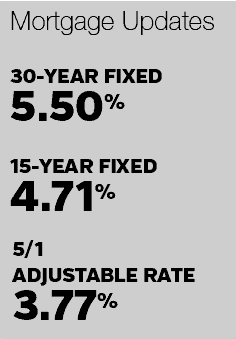
Mortgage Rates: 
I'm so old I remember when I had a VARIABLE loan at 14.0% a year to buy my first home, a townhouse in Sunnyvale CA!  I was sure jealous of my parents who had a CAL-VET loan at fixed at 4.0%.  With that memory, rather than using cash to pay off my home loan early, I locked in a fixed rate mortgage at 3.375 % and put the cash in TIPS and I-Bonds.  Some of my  iBonds have base rates of 3.0% and will pay 10.23% for the next six months! 


CPI vs Fed Funds Rate vs Expected 10-Yr Inflation
A rising Fed Funds Rate was not bad news for the stock market coming out of the Great Recession and the telecom/internet bubble collapses:

US Fed Funds Rate vs. S&P 500   

TIPS Core Yield vs S&P 500
More about TIPS including when to buy them is covered in my newsletter. 

Can the Fed engineer the elusive "soft landing" to tame inflation currently running at 8.5% without pushing the US economy into another recession?  
How do you invest in such difficult times?
First off, I'd start with people who have been recommending TIPS and I-Bonds in their newsletters as I have... start by reading:
Then subscribe to:
Kirk Lindstrom's Investment Letter Service

Wednesday, September 26, 2018

Fed Raises Rates - Removes "Accommodative" from Policy Language

Today the US Federal Reserve Open Market Committee (FOMC) raised their Fed funds interest rate by 0.25% to a new range of 2.00% to 2.25%. As my chart below shows, this new rate is still low by historical standards.

The Fed will also increase its balance sheet reduction (reverse QE) by another $12 billion per month:
The Committee directs the Desk to continue rolling over at auction the amount of principal payments from the Federal Reserve's holdings of Treasury securities maturing during September that exceeds $24 billion, and to continue reinvesting in agency mortgage-backed securities the amount of principal payments from the Federal Reserve's holdings of agency debt and agency mortgage-backed securities received during September that exceeds $16 billion. Effective in October, the Committee directs the Desk to roll over at auction the amount of principal payments from the Federal Reserve's holdings of Treasury securities maturing during each calendar month that exceeds $30 billion, and to reinvest in agency mortgage-backed securities the amount of principal payments from the Federal Reserve's holdings of agency debt and agency mortgage-backed securities received during each calendar month that exceeds $20 billion. Small deviations from these amounts for operational reasons are acceptable.
The US Stock markets liked the move because it signals that the economy is still strong.
Had the FOMC not raised rates, perhaps under political pressure from President Trump who likes low rates to stimulate GDP growth, the markets could have take in as a sign of weakness in the US economy.
 Subscribe NOW  and get
the
 September 2018 
Issue for FREE!!!

The FOMC also increased their estimate for GDP growth for 2018 and 2019 since the last meeting.

More information:

Friday, July 14, 2017

US Fed Funds Rate vs. 11th District Cost of Funds Index (COFI)

This graph shows the US Federal Reserve Funds Rate  plotted vs. the 11th District Cost of Funds Index (COFI).  COFI is an important index for setting interest rates for home purchases and refinancing.

From the Federal Home Loan Bank of San Francisco:
"The 11th District Monthly Weighted Average Cost of Funds Index (COFI) is one of many indices used by mortgage lenders to adjust the interest rate on adjustable rate mortgages. The COFI is computed from the actual interest expenses reported for a given month by the Arizona, California, and Nevada savings institution members of the Federal Home Loan Bank of San Francisco (Bank) that satisfy the Bank's criteria for inclusion in the COFI (COFI Reporting Members).
In addition to the COFI, the Bank publishes semiannual weighted average cost of funds indices for California and the 11th District, which are based on the interest expenses of applicable COFI Reporting Members from January through June and July through December each year."
Web page snapshot for 7/14/17:
Kirk Lindstrom's Investment Letter Service:
  • Subscribe to my newsletter service NOW and get the July 2017 Issue for FREE!   Your 1 year, 12 issue subscription will start with next month's issue.
  • Get email alerts when I buy or sell securities for my explore portfolio
  • "Auto Buy" and "Auto Sell" levels set ahead of time for target buy and sell levels for my securities.  This allows you to place "limit orders" with your broker in advance so you can go about your business.
  • All questions about what I write answered by Email.  If what I write is not clear to you, just ask! 


Wednesday, September 21, 2011

Fed Twist - US Federal Reserve Twist Statement Explained

Today the US Federal Reserve Open Market Committee (FOMC) met then issued a Press Release explaining what many on TV call the new "Fed Twist Policy." In a nutshell, the FOMC will sell short term US Treasuries to generate funds to buy longer term US Treasuries. They explain it in paragraph three of today's press release.
To support a stronger economic recovery and to help ensure that inflation, over time, is at levels consistent with the dual mandate, the Committee decided today to extend the average maturity of its holdings of securities. The Committee intends to purchase, by the end of June 2012, $400 billion of Treasury securities with remaining maturities of 6 years to 30 years and to sell an equal amount of Treasury securities with remaining maturities of 3 years or less. This program should put downward pressure on longer-term interest rates and help make broader financial conditions more accommodative. The Committee will regularly review the size and composition of its securities holdings and is prepared to adjust those holdings as appropriate.
The FOMC will also support the housing market:
To help support conditions in mortgage markets, the Committee will now reinvest principal payments from its holdings of agency debt and agency mortgage-backed securities in agency mortgage-backed securities. In addition, the Committee will maintain its existing policy of rolling over maturing Treasury securities at auction.
The FOMC also voted to keep interest rates between 0 to 1/4 percent and said they anticipate "exceptionally low levels for the federal funds rate at least through mid-2013." The decisions today were not unanimous. Eight members of the FOMC voted for this action and three opposed it.
Voting for the FOMC monetary policy action were: Ben S. Bernanke, Chairman; William C. Dudley, Vice Chairman; Elizabeth A. Duke; Charles L. Evans; Sarah Bloom Raskin; Daniel K. Tarullo; and Janet L. Yellen. Voting against the action were Richard W. Fisher, Narayana Kocherlakota, and Charles I. Plosser, who did not support additional policy accommodation at this time.
best regards
Kirk Lindstrom
Editor of "Kirk Lindstrom's Investment Letter"
 

Monday, March 28, 2011

Fed May End QE2 Early

Some members of the Federal Reserve are quite worried about inflation and speaking their mind:
Fed Should Consider Curtailing Stimulus Program, Bullard Says
March 28 (Bloomberg) -- St. Louis Federal Reserve Bank President James Bullard said policy makers should review whether to curtail a plan to buy $600 billion in Treasury securities, noting that the U.S. recovery may not need that much stimulus.

“The economy is looking pretty good,” Bullard said to reporters in Marseille, France, on March 26. “It is still reasonable to review QE2 in the coming meetings, especially this April meeting, and see if we want to decide to finish the program or to stop a little bit short,” he said, referring to the second round of so-called quantitative easing.
...
“If the economy is as strong as I think it is then I think it may be reasonable to send a signal to markets that we’re going to start withdrawing our stimulus, and I’d start by pulling up a little bit short on the QE2 program,” Bullard said. “We can’t be as accommodative as we are today for too long, we’ll create a lot of inflation if we do that.”
CPI is above its 2008 level so SS recipients should get a COLA this year, but like most of us who work and pay into SS, the gain will probably be eaten up completely by higher medical insurance costs.
At least most people on SS got a nice, big 5.8% raise in 2009 that they kept when CPI fell while most of the country took pay cuts or got no raises.
It ruins my day just to think how much my own medical insurance went up since that last SS COLA of 5.8%!

Tuesday, March 03, 2009

Definition of TALF - Term Asset-Backed Securities Loan Facility

Today the Federal Reserve and the US Treasury announced the launch of the "Term Asset-Backed Securities Loan Facility" or "TALF" for short. The purpose of TALF is to help "Main Street" get access to credit so consumers and small businesses can once again buy goods and services on credit. This is expected to significantly stimulate the economy.

From the joint press release:

In carrying out the Financial Stability Plan, the Department of the Treasury and the Federal Reserve Board are announcing the launch of the Term Asset-Backed Securities Loan Facility (TALF), a component of the Consumer and Business Lending Initiative (CBLI). The TALF has the potential to generate up to $1 trillion of lending for businesses and households.

The TALF is designed to catalyze the securitization markets by providing financing to investors to support their purchases of certain AAA-rated asset-backed securities (ABS). These markets have historically been a critical component of lending in our financial system, but they have been virtually shuttered since the worsening of the financial crisis in October. By reopening these markets, the TALF will assist lenders in meeting the borrowing needs of consumers and small businesses, helping to stimulate the broader economy.

Under today's announcement, the Federal Reserve Bank of New York will lend up to $200 billion to eligible owners of certain AAA-rated ABS backed by newly and recently originated auto loans, credit card loans, student loans, and SBA-guaranteed small business loans. Issuers and investors in the private sector are expected to begin arranging and marketing new securitizations of recently generated loans, and subscriptions for funding in March will be accepted on March 17, 2009. On March 25, 2009, those new securitizations will be funded by the program, creating new lending capacity for additional future loans.

The program will hold monthly fundings through December 2009 or longer if the Federal Reserve Board chooses to extend the facility.

Today the Board also released revised terms and conditions for the facility and a revised set of frequently asked questions. The revisions include a reduction in the interest rates and collateral haircuts for loans secured by asset-backed securities guaranteed by the Small Business Administration or backed by government-guaranteed student loans. The modifications are warranted by the minimal credit risk on these assets owing to the government guarantees, and, by making the terms of the TALF loans more attractive, they should encourage greater flows of credit to small businesses and students.

Additional details of the TALF and the CBLI can be found at http://www.financialstability.gov/. Further information on the Federal Reserve's credit and liquidity programs is available at http://www.federalreserve.gov/monetarypolicy/bst.htm. The Treasury Department also released a new white paper outlining efforts to unlock credit markets. On February 10, 2009, the Board and Treasury announced an expansion of TALF to include new asset categories that could generate up to $1 trillion in new lending. Teams from the Treasury Department and Federal Reserve are analyzing the appropriate terms and conditions for accepting commercial mortgage-backed securities (CMBS) and are evaluating a number of other types of AAA-rated newly issued ABS for possible acceptance under the expanded program. The expanded program will remain focused on securities that will have the greatest macroeconomic impact and can most efficiently be added to the TALF at a low and manageable risk to the government.

The Federal Reserve and Treasury currently anticipate that ABS backed by rental, commercial, and government vehicle fleet leases, and ABS backed by small ticket equipment, heavy equipment, and agricultural equipment loans and leases will be eligible for the April funding of the TALF. Other types of securities under consideration include private-label residential mortgage-backed securities, collateralized loan and debt obligations, and other ABS not included in the initial rollout such as ABS backed by non-auto floorplan loans and ABS backed by mortgage-servicer advances. As is the case for the current categories of newly originated loans, the TALF will combine public financing with private capital to encourage the private securitization of loans in the asset classes eligible in the expanded program.

Increased TALF lending and other actions to stabilize the financial system have the potential to greatly expand the Federal Reserve's balance sheet. In order for the Federal Reserve to conduct monetary policy over time in a way consistent with maximum sustainable employment and price stability, it must be able to manage its balance sheet, and in particular, to control the amount of reserves that the Federal Reserve provides to the banking system. The amount of reserves is the key determinant of the interest rate that the Federal Reserve uses to pursue its monetary policy objectives. Treasury and the Federal Reserve will seek legislation to give the Federal Reserve the additional tools it will need to enable it to manage the level of reserves while providing the funding necessary for the TALF and for other key credit-easing programs.

Key Dates for the TALF
Schedule for First Funding with Initial Eligible Assets

Date Announcement/Event
March 3, 2009 Launch of the TALF. Publication of the details for the first funding
March 3-17, 2009 Marketing first funding to investors
March 17, 2009 Subscriptions for first funding for TALF recorded
March 25, 2009 First funds from the TALF disbursed

Schedule for Second Funding

Date Announcement/Event
March 24, 2009 Announcement of details of second funding
March 24-April 7, 2009 Marketing second funding to investors
April 7, 2009 Subscriptions for second funding for TALF recorded
April 14, 2009 Second funds from the TALF disbursed

Related Press Release

Federal Reserve Bank of New York announces March 17 TALF Operation


Post and Read Comments


Tuesday, February 24, 2009

Fed Chairman Bernanke Said Recession Should End This Year

In his prepared remarks today, Federal Reserve chairman Ben Bernanke said the recession should end this year. Bernanke said this will require restoring financial stability. Bernanke said this during his "Semiannual Monetary Policy Report to the Congress" given before the "Committee on Banking, Housing and Urban Affairs" in the U.S. Senate in Washington, D.C. It was broadcast mostly live on CNBC. Bernanke said:
"The central tendency of their most recent projections for real GDP implies a decline of 1/2 percent to 1-1/4 percent over the four quarters of 2009. These projections reflect an expected significant contraction in the first half of this year combined with an anticipated gradual resumption of growth in the second half."
Bernanke said we need fiscal stimulus:
"To break the adverse feedback loop, it is essential that we continue to complement fiscal stimulus with strong government action to stabilize financial institutions and financial markets."
Bernanke said the recession could end in 2009 with 2010 a recovery year:
"If actions taken by the Administration, the Congress, and the Federal Reserve are successful in restoring some measure of financial stability--and only if that is the case, in my view--there is a reasonable prospect that the current recession will end in 2009 and that 2010 will be a year of recovery."

but he expects a FULL RECOVERY to take more than two years:
"The central tendency for the participants' estimates of the longer-run growth rate of real GDP is 2-1/2 percent to 2-3/4 percent; the central tendency for the longer-run rate of unemployment is 4-3/4 percent to 5 percent; and the central tendency for the longer-run rate of inflation is 1-3/4 percent to 2 percent, with the majority of participants looking for 2 percent inflation in the long run. These values are all notably different from the central tendencies of the projections for 2010 and 2011, reflecting the view of policymakers that a full recovery of the economy from the current recession is likely to take more than two or three years."
Read the Full Text of Bernanke's Testimony here.

During the Q&A, my favorite line was Bernanke explaining why we should help others having trouble paying their mortgages, a policy that "rewards bad behavior."
"I fully understand the sentiment. A lot of this goes against American values of self reliance and responsibility... I would give the following example. If your neighbor smokes in bed and sets his house a fire. And you live in a neighborhood of closely packed wooden houses. You could punish him very severely by refusing to send the fire department and then he would probably learn his lesson about smoking in bed. But, unfortunately, in the process you would have the entire neighborhood burning down. "
The question was partially in response to Rick Santelli's "Chicago Tea Party in July" Rant video that led to a flood of letters to congress protesting efforts to reduce what people owe who signed legal contracts with banks, often after lying about their income to qualify for the mortgage.


Tuesday, December 02, 2008

Bernake Credit Crisis is ‘no comparison’ to Great Depression

Yesterday Federal Reserve chairman Ben Bernanke said the current economic situation bears "no comparison" to the much deeper crisis of the 1930s Great Depression.

During a Q&A session in Austin Texas, Bernanke said
"Well, you hear a lot of loose talk, but let me just ... say, as a scholar of the Great Depression -- and I've written books about the Depression and been very interested in this since I was in graduate school, there's no comparison."
Bernanke also said there is "an order-of-magnitude difference" between now and the Great Depression of the 1930s.
  • "During the 1930s, there was a worldwide depression that lasted for about 12 years and was only ended by a world war"

  • "During that time, the unemployment rate went to 25 percent, at least, based on the data that we have. The real GDP (gross domestic product) fell by one-third. About a third of all of the banks failed. The stock market fell 90 percent."

  • "very difficult circumstances... we didn't have the social safety net that we have today. So let's put that out of our minds; there's no -- there's comparison in terms of severity."

  • "We're very lucky to live in a country as rich and diversified as the one we have. And I hope that we will have a quick and rapid recovery from the current slowdown."

  • "We have learned from that experience that monetary policy has got to be proactive and supportive of the economy in a situation of difficult financial conditions."

  • "The other part was -- the other error, the big mistake that policymakers made in the early '30s was they essentially allowed the financial system to collapse and they didn't do anything about it. The Federal Reserve did no action as the banks failed by the hundreds and the thousands."
This agrees with statements from ECRI, the Economic Cycle Research Institute. In the story "Recession? Yes. Depression? No." Lakshman Achuthan, managing director of the ECRI, said the continuing decline of their weekly leading index, WLI, means there will be no recovery in the next half-year, and that this recession will be at least as severe as that in the 1970s. It does not mean we're headed for a depression, a word being used carelessly by some. Achuthan said
"When we look at the leading index during the depression in the 1920s and the Great Depression in the 1930s, it was much, much worse, materially worse, much deeper and nothing like we've seen so far"
More about

.

Thursday, October 23, 2008

Allan Greenspan's Shocked Disbelief and Denial of Responsibility

During his prepared testimony today before the House Oversight Committee, former Fed chairman Allan Greenspan said
"those of us who have looked to the self-interest of lending institutions to protect shareholder's equity (myself especially) are in a state of shocked disbelief. Such counterparty surveillance is a central pillar of our financial markets’ state of balance. If it fails, as occurred this year, market stability is undermined."
It is hard to believe the Fed chairman was that clueless.

Did Greenspan not learn anything from Enron, WorldCon and the accounting firms that signed off on the books of such good clients?

Did Greenspan not learn anything all the internet IPOs of worthless companies with no profits where insiders kept selling shares all the way up and all the way down while leaving "clueless" 401K type shareholders and index funds who had to buy holding the bag?

Key Comments:
  • "In 2005, I raised concerns that the protracted period of underpricing of risk, if history was any guide, would have dire consequences. "
    Reminds me of tobacco companies putting labels on their death sticks saying "smoking can kill you."

  • "This crisis, however, has turned out to be much broader than anything I could have imagined."
    No kidding Al....

  • The evidence strongly suggests that without the excess demand from securitizers, subprime mortgage originations (undeniably the original source of crisis) would have been far smaller and defaults accordingly far fewer. But subprime mortgages pooled and sold as securities became subject to explosive demand from investors around the world. These mortgage backed securities being “subprime” were originally offered at what appeared to be exceptionally high risk-adjusted market interest rates. But with U.S. home prices still rising, delinquency and foreclosure rates were deceptively modest. Losses were minimal. To the most sophisticated investors in the world, they were wrongly viewed as a “steal.
    Yes Al. The people we paid and TRUSTED you to REGULATE found a way to sneak their "worthless" or at least "harmful products" by YOU so they could generate high fees and vanish before the stuff hit the fan. Skip the fancy language Al and admit you screwed the pooch.
At least I like his conclusion:
"This crisis will pass, and America will reemerge with a far sounder financial system."
Full text of Greenspan's prepared remarks.

During the Q&A, Greenspan said he did not take out an adjustable mortgage because he thought it was too risky. I believe that is a lie or a misrepresentation of facts. I doubt he needed a mortgage with his high net worth AND I remember clearly him on TV recommending adjustable mortgages. Erin Burnett said the same thing on CNBC today.

Friday, July 11, 2008

Crude Oil Testing 2008 Support Levels

This chart, courtesy of Chart of the Day, shows the current trend of West Texas Intermediate crude oil (WTIC) was up and the price was testing support two days ago.

Click charts to see full sized images

The last two days oil has rallied over $10 from $135 to its current price of $145.48!


If oil holds support and rallies to new highs, then a point and figure chart courtesy of Stockcharts.com, projects $172!
If oil breaks support (the green line on the first graph) then we could expect oil to find minor support (via PnF chart above) at $118, $110 and $99.

This chart suggests support for oil prices at $100 and then major support at $80. Destroy enough demand for oil with a global recession or increase supply by drilling for more oil or with a serious effort to bring alternative energy sources online and the next major support level is $37!

Let us look at the US Dollar to get a clue which way oil will go on the long term.


It appears the US Dollar has stopped its decline since bottoming earlier in the year. Perhaps we will see a reverse of this decline if the Fed raises rates a symbolic 25 or 50 basis points to show it is serious about fighting inflation.

This next chart, courtesy of clevelandfed.org, shows 50% of people think rates will remain at 2.00% through September and over 25% think rates will be higher.

This greater than 75% expectation that the Fed will not cut interest rates further has given the dollar reason to stop falling. For oil to continue to rally exponentially means it is doing so without the aid of a falling dollar.

Note: I am only saying what the charts show as major resistance and support levels. I am not predicting these prices!

Wednesday, January 30, 2008

Monthly Chart & Fed Fund Rate Cut Suggests The Bottom Is In

This monthly chart suggests the bottom is in or at least close to being in.

Click chart courtesy of stockcharts.com to see it full sized.


With today's Fed action to cut the Fed Funds Rate another 0.50% to 3.0%, the bears are runniong out of ammunition.


==> High Yield CDs <==

Kirk's Investment Newsletter: Testimonials - Subscribe Now

Tuesday, January 22, 2008

Ben Bernanke's FOMC Cuts Rates 0.75% to 3.50%

Bob Brinker, Jim Cramer and many other "noisy pundits" will say Ben Bernanke's Federal Reserve Open Market Committee (FOMC) finally "listened" to their advice. Saner minds will conclude the economic data the FOMC watches has quickly deteoriated and they needed to take quick action to avoid a recession. Whatever the reason, the Federal Reserve cut the Fed Funds Rate a week before their next scheduled meeting this morning.

NEWS ALERT from The Wall Street Journal: Jan. 22, 2008
The Federal Reserve, confronted with increased fears of a recession, cut the federal-funds rate by three-quarters of a percentage point on Tuesday. Policy makers cited a weakening economic outlook, and downside risks to growth. The move came amid a global stock-market selloff. On the news, U.S. stock futures quickly reclaimed some early losses but remained volatile.
Everyone is so negative. I wonder if the rate cut will help or do we continue to sell-off.

MARKET ALERT from The Wall Street Journal.
Jan. 22, 2007

The global market selloff accelerated as shares came under pressure for the second straight session. In Asia, Hong Kong plunged 8.7%, Australia lost more than 7% and Japan ended 5.7% lower. Trading in India was halted for an hour after shares sank 10% as markets opened. In Europe, markets began sharply lower, but recovered somewhat, with London briefly pushing into positive territory.

In currencies, the dollar gained against the euro and the pound, rising to $1.4386 versus the euro and $1.9353 to the pound, but it weakened slightly against the yen, trading at 106.76 yen.
Discuss the market in our facebook forum "Investing for the Long Term."

I woud sure like to see some of the CEOs at the cash rich companies I cover in "Kirk's Investment Newsletter" step up and buy back their shares here aggressively.

Click Here For The Wall Street Journal

Tuesday, September 18, 2007

Chart of Stock Markets vs Fed Funds Rate

Click chart to see it full sized

The Federal Reserve cut its Fed Funds interst rate today from 5.25% to 4.75% and they cut their discount rate to from 5.75% to 5.25%. Below is the text of their statement explaining their actions.

Release Date: September 18, 2007

  • For immediate release
    .
    The Federal Open Market Committee decided today to lower its target for the federal funds rate 50 basis points to 4-3/4 percent.
    .
    Economic growth was moderate during the first half of the year, but the tightening of credit conditions has the potential to intensify the housing correction and to restrain economic growth more generally. Today’s action is intended to help forestall some of the adverse effects on the broader economy that might otherwise arise from the disruptions in financial markets and to promote moderate growth over time.
    .
    Readings on core inflation have improved modestly this year. However, the Committee judges that some inflation risks remain, and it will continue to monitor inflation developments carefully.
    .
    Developments in financial markets since the Committee’s last regular meeting have increased the uncertainty surrounding the economic outlook. The Committee will continue to assess the effects of these and other developments on economic prospects and will act as needed to foster price stability and sustainable economic growth.
    .
    Voting for the FOMC monetary policy action were: Ben S. Bernanke, Chairman; Timothy F. Geithner, Vice Chairman; Charles L. Evans; Thomas M. Hoenig; Donald L. Kohn; Randall S. Kroszner; Frederic S. Mishkin; William Poole; Eric Rosengren; and Kevin M. Warsh.
    .
    In a related action, the Board of Governors unanimously approved a 50-basis-point decrease in the discount rate to 5-1/4 percent. In taking this action, the Board approved the requests submitted by the Boards of Directors of the Federal Reserve Banks of Boston, New York, Cleveland, St. Louis, Minneapolis, Kansas City, and San Francisco.
Kirk's Comments: I view this is positive as the Fed is taking action to help the credit markets and it has returned its bias to "neutral." What this all means to the stock markets is discussed in my October newsletter I am writing now and hope to release by the weekend. Subscribe now and get my list of stocks I think will benefit from today's action.


    Followers - Click "follow" to get an email alert for new articles

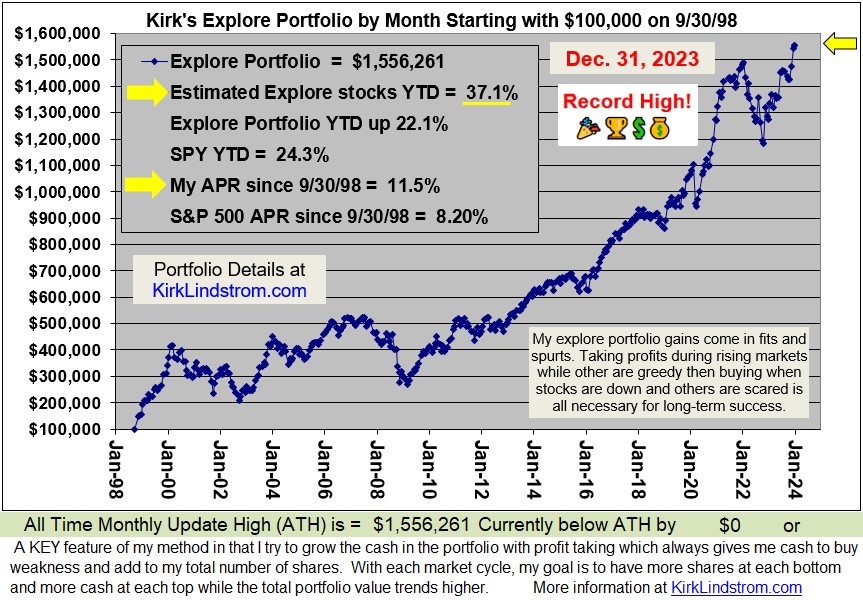
    Kirk Lindstrom's Investment Letter Performance